Stroke Care and Rehabilitation in Malaysia

With careful planning and dedicated care, individuals can be supported to improve functions and post-stroke complications.

Understanding Stroke

Understanding Stroke

A stroke occurs when blood supply to the brain is interrupted and can result in brain damage. When you have a stroke, the side of your body opposite to the brain may become weak and numb. The size and location of the brain damage will affect the rate and extent of recovery of the stroke survivor. 

Impact of Stroke

Stroke affects different individuals in different ways. One survivor may not experience all the consequences of stroke.

Mobility and Activities of Daily Living (ADL)

  • Weakness on one side of the body or problems with coordination and balance
  • Difficulty moving around and carrying out daily routines such as feeding, showering, and dressing

Nutrition Support

  • Difficulty swallowing
  • May need to be on a special food consistency
  • Supplements may be prescribed to meet your daily nutritional requirements

Cognitive Impact

  • May have poor memory attention or difficulty with thinking and reasoning
  • May affect your ability to perform certain tasks and make decisions

Behaviour and Personality

  • Difficulty regulating emotions, decision making and judgement
  • Changes include: aggression, apathy, disinhibition, emotional lability, irritability, and impulsivity
Supporting a Loved One with Stroke

Supporting a Loved One with Stroke

Having a strong support system is an important part of the care journey. Stroke survivors are at a high risk of having another stroke. You can reduce the risks by ensuring your loved one is eating well, exercising regularly, and keeping to the post-stroke care plan prescribed by their healthcare provider.

If your loved one experiences imbalance that results in falls, inability to walk for a short period of time without stopping to rest, or inability to participate in daily activities, please consider physiotherapy or rehabilitation. 

Our Stroke Care and Rehabilitation Services

Stroke rehabilitation is important to retrain your brain as much as possible to recover the abilities that may have been lost after a stroke. Rehabilitation will include exercises as well as functional mobility training such as walking and performing activities of daily living.
Rehabilitation Programmes at ECON Healthcare

Rehabilitation Programmes

We are able to support you or your loved one in keeping physically and mentally fit. We design specialised rehabilitation programmes for individuals with weakened mobility as a result of stroke.

Our trained and trusted therapists will set functional goals with your loved one, aimed at regaining physical strength, balance, and movement abilities affected by the stroke.

Home Care at ECON Healthcare

Home Care

Our care staff will help to provide support to your loved one with activities of daily living and light cleaning of the home environment. Individuals with stroke may find it challenging to perform simple functional tasks such as showering, brushing their teeth or feeding.

We are able to support such requests, and help your loved one relearn basic skills or new techniques for independent living.

Nursing Home Care at ECON Healthcare

Residential Nursing Home Care

In the major stages of stroke, it is likely that the caregiver or family will need additional support to carry out day-to-day tasks. You may decide that you would benefit from a nursing home care to help you manage your loved one’s care needs.

Our seniors will receive specialised nutrition care at our homes, participate in recreational activities, and personalised rehabilitation programmes.

FAQs about Bedridden Patient Care Services

Bedridden patient care is professional nursing and personal support provided to individuals who cannot leave their bed due to illness, injury, or advanced age. It includes hygiene assistance, wound care, nutritional management, medication administration, regular repositioning, and health monitoring. Care can be provided in a residential nursing home or at home, depending on the patient’s condition and the family’s situation.
A person may become bedridden following a severe stroke, brain or spinal cord injury, advanced cancer, major surgery, or advanced stages of conditions such as dementia or Parkinson’s disease. Severe chronic illness or organ failure can also result in prolonged bed rest. The specific cause determines the type of nursing care, rehabilitation support, and medical monitoring required.
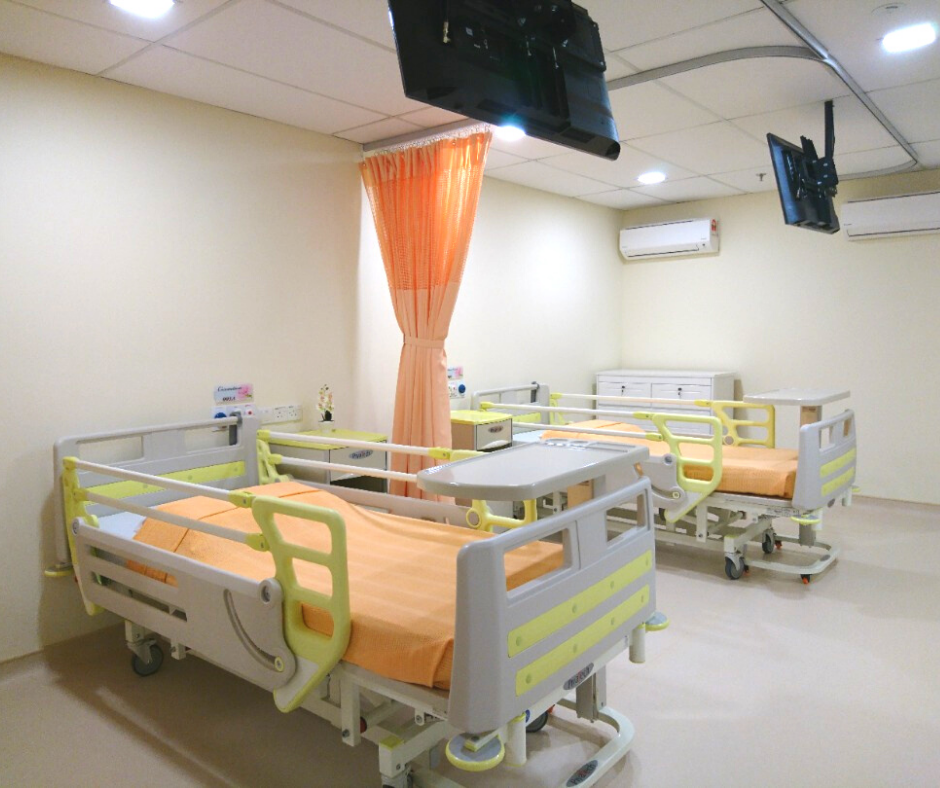
Professional nursing care reduces the risk of serious complications in bedridden patients by providing regular repositioning, wound care, catheter management, medication administration, and health monitoring. Trained nurses identify early signs of infection, pressure sores, or health deterioration and respond promptly. Patients under professional nursing care are more comfortable, experience fewer preventable complications, and receive structured support for nutrition, hygiene, and daily activities.
Professional bedridden patient care includes 24/7 nursing support, personal hygiene assistance, wound care and pressure sore management, catheter care, medication administration, vital signs monitoring, and nutritional support. Physiotherapy and occupational therapy may also be included to maintain muscle function and prevent joint stiffness. A personalised care plan is developed based on each patient’s medical condition and needs.
Bedridden care is a higher level of nursing support for patients who cannot move independently and require full physical assistance with all daily activities. Regular nursing home care suits residents who retain some mobility and can perform basic tasks independently. Bedridden care involves more intensive repositioning schedules, wound care, clinical monitoring, and interventions to prevent complications from prolonged immobility.
Yes, bedridden patients with stable medical conditions can receive professional nursing care at home in Malaysia. Home-based bedridden care includes nursing visits, personal hygiene assistance, wound care, catheter management, medication administration, and health monitoring. At ECON Healthcare, home care for bedridden patients is available across the Klang Valley and Johor Bahru on a short-term or long-term basis.
A bedridden patient in a nursing home follows a structured daily routine that includes morning hygiene care, medication administration, breakfast and nutritional monitoring, physiotherapy or passive exercises, and regular repositioning every two hours. Afternoon sessions include group activities and social engagement. Evening care covers hygiene, medication, and a final repositioning before sleep. Nursing staff monitor vital signs and skin condition throughout the day and night.
A bedridden patient’s daily nursing care includes personal hygiene such as bathing and oral care, regular repositioning to prevent pressure sores, medication administration, vital signs monitoring, wound or catheter care, nutritional management including tube feeding where needed, physiotherapy to maintain muscle function, and emotional support. A structured daily care routine helps maintain comfort, dignity, and overall health.
Respite care for bedridden patients is a short-term residential nursing home stay arranged to give family caregivers a temporary break. At ECON Healthcare, the 14-Day Respite Care Programme provides 24/7 nursing support, medication management, daily hygiene care, and health monitoring in a fully supported environment, with fees starting from RM3,200 based on a 4-bed room rate. Room upgrades are available.
To arrange nursing home care for a bedridden patient in Malaysia, contact the care facility directly to discuss the patient’s medical condition, level of dependency, and care needs. The nursing home will assess whether they can meet the patient’s requirements. At ECON Healthcare, families can schedule a visit or speak with our care team via WhatsApp to discuss room availability, care services, and the admission process at our Puchong, Selangor or Perling, Johor centre.