A stroke can change a family’s routines in a single day. Your loved one may be medically stable enough to leave the hospital, yet still need help standing, swallowing safely, speaking clearly, managing medication, or simply getting through the day without falling. Choosing a post stroke rehabilitation nursing home is therefore not just about finding a bed. It is about finding a setting where recovery, safety, and dignity can move forward together.
For many families, the decision comes at a difficult time. Hospital discharge may feel rushed, while family members are trying to understand new care needs and balance work, travel, and responsibilities at home. A nursing home with rehabilitation support can provide structured care when returning home immediately is not safe or practical.
What Recovery After a Stroke Can Look Like
No two strokes have the same effects. One person may regain strength quickly but struggle with speech or memory. Another may have weakness on one side, poor balance, swallowing difficulties, or a higher risk of another medical complication. Progress can be uneven. A good day may be followed by fatigue, frustration, or a temporary setback.
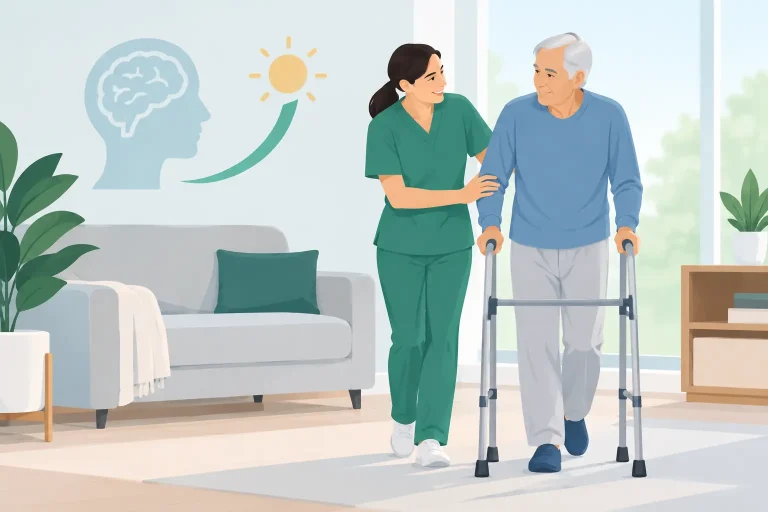
Rehabilitation focuses on helping a person recover abilities where possible and adapt safely where recovery takes longer. This may include practicing transfers from bed to chair, walking with an aid, improving hand function, learning safer ways to eat, or building confidence with daily routines such as washing and dressing.
The right care plan depends on the person’s condition before and after the stroke, the severity of impairment, other health concerns, and the support available at home. Some residents need short-term intensive rehabilitation before returning home. Others require longer-term nursing care alongside ongoing therapy because mobility, cognitive changes, or medical needs make independent living unlikely for now.
What a Post Stroke Rehabilitation Nursing Home Should Provide
A post stroke rehabilitation nursing home should bring nursing care and rehabilitation into one coordinated daily plan. Therapy sessions matter, but so does what happens between them. If a resident practices walking with a physiotherapist but is not supported to move safely at other times, progress can be harder to sustain.
Skilled nursing and clinical observation
After a stroke, residents may need monitoring for blood pressure changes, diabetes, medication side effects, skin concerns, dehydration, pain, constipation, or signs of infection. Nursing staff should understand the care routines that reduce avoidable complications, including repositioning for residents with limited mobility and careful support during meals for those with swallowing risks.
Ask how the home communicates changes in condition to family members and how it coordinates with doctors or hospitals when additional medical attention is needed. Clear communication is as reassuring as clinical capability, especially when family cannot be present every day.
Meaningful rehabilitation, not therapy in isolation
Physiotherapy is often central to stroke recovery. It can support strength, balance, coordination, mobility, and safer transfers. Occupational therapy, where available, may help residents relearn everyday activities and use adaptive techniques. Speech and swallowing support may also be needed for residents who have communication difficulties or dysphagia.
Families should ask what therapy looks like in practice. How often will it be reviewed? Are goals specific to the resident’s needs? How does the care team carry therapy recommendations into daily routines? A plan focused only on exercise may miss the broader goal: helping your loved one participate in life as safely and independently as possible.
Nutrition and safer eating support
A person who has difficulty swallowing may need modified food textures, thickened fluids, closer supervision during meals, or guidance from a qualified professional. These needs should never be treated as a minor detail. Poor swallowing management can increase the risk of choking, dehydration, malnutrition, and aspiration.
Nutrition also affects energy, wound healing, muscle recovery, and mood. A thoughtful care plan considers appetite, dietary restrictions, food preferences, and whether the resident needs assistance to eat at an unhurried pace.
Emotional and social care
Stroke can affect identity as much as physical ability. A formerly independent parent may feel embarrassed about needing help or discouraged by slow progress. Depression, anxiety, irritability, and withdrawal can occur, particularly when communication has become difficult.
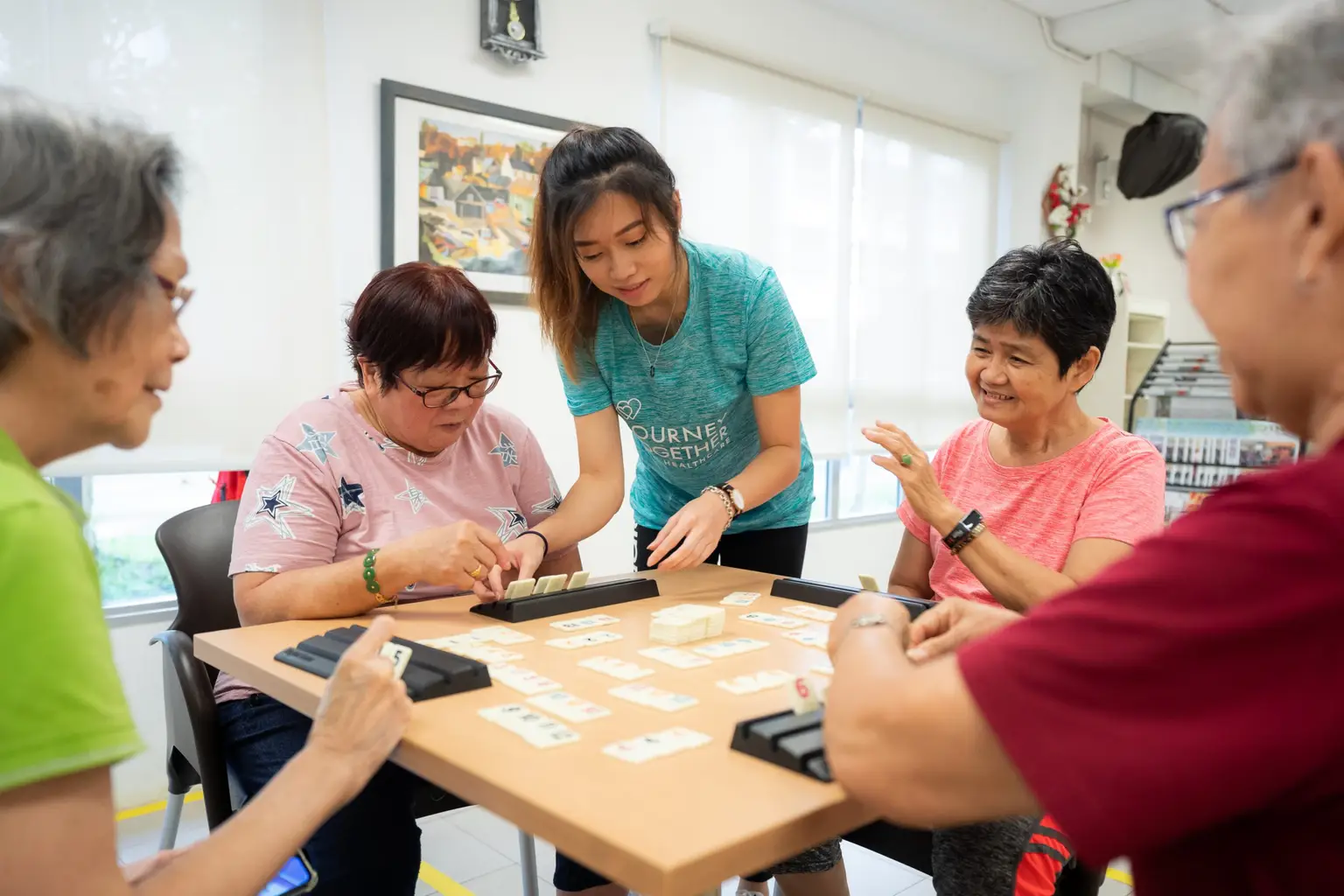
A supportive nursing home recognizes that rehabilitation is not only physical. Familiar routines, respectful conversation, social activities adapted to ability, and regular family involvement can help a resident feel like a person rather than a patient. Small choices – what to wear, when to rest, which activity to join – can restore a sense of control.
Questions to Ask Before Making a Decision
A visit gives families information that brochures cannot. Notice whether staff speak directly to residents, whether call systems appear accessible, and whether shared spaces feel calm, clean, and usable for people with mobility limitations. Observe how staff respond when a resident needs assistance.
During an assessment or site visit, ask about the qualifications and availability of nurses and rehabilitation professionals. Understand how the home manages falls, emergencies, medication, swallowing concerns, and hospital transfers. It is also reasonable to ask how often families receive updates and who will be the main point of contact.
Four practical questions can clarify whether the home is equipped for your loved one:
- How will the care plan reflect their current stroke-related needs and personal goals?
- What rehabilitation services are available, and how is progress reviewed?
- How are meals, mobility, toileting, and skin care managed for residents who need hands-on help?
- What happens if their condition changes outside regular visiting hours?
Cost and care scope should be discussed openly as well. Families need to know what is included in the base fee, which therapy or medical services may be charged separately, and whether the level of care can be adjusted if needs increase. The least expensive option is not always the best value if it cannot safely support the person’s needs.
Building a Plan With the Family, Not Around the Family
Families remain an essential part of recovery, even when a loved one lives in a nursing home. Sharing information about habits, favorite foods, cultural preferences, past routines, and what encourages or upsets your loved one helps staff provide more personal care. Regular visits can also motivate a resident and give family members a clearer view of progress.
At the same time, families should not feel that they must become full-time caregivers to prove their love. Supporting a parent or spouse after a stroke can be physically and emotionally demanding. A dependable care team gives family members room to be present as children, spouses, and companions, rather than being solely responsible for every clinical task.
For families in Johor Bahru or the Klang Valley, a provider with both nursing and rehabilitation experience can simplify coordination when needs are complex. ECON Healthcare approaches care through a multidisciplinary team, recognizing that nursing, mobility support, nutrition, social connection, and family communication all affect a resident’s well-being.
Signs That a Care Plan Needs Review
Stroke recovery is not fixed. A plan that was appropriate at discharge may need adjustment as strength improves, a resident becomes more confident, or new medical concerns emerge. Families should expect care goals to be reviewed rather than treated as permanent.
Bring concerns forward if your loved one seems increasingly withdrawn, is losing weight, has repeated falls, develops skin redness, appears overly sedated, or shows a noticeable decline in mobility or alertness. These signs do not always mean something has gone seriously wrong, but they deserve timely discussion.
It is equally valuable to recognize progress that may seem small: sitting up longer, using a stronger voice, eating with less help, taking a few more supported steps, or joining a conversation. Recovery is often built through these quiet gains.
Choosing care after a stroke is a decision made with both the head and the heart. Give yourself permission to ask detailed questions, seek an individualized assessment, and choose the setting where your loved one can receive capable support while remaining known, respected, and connected to family.